
Istanbul
Hi, I'm Dr. Bircan.
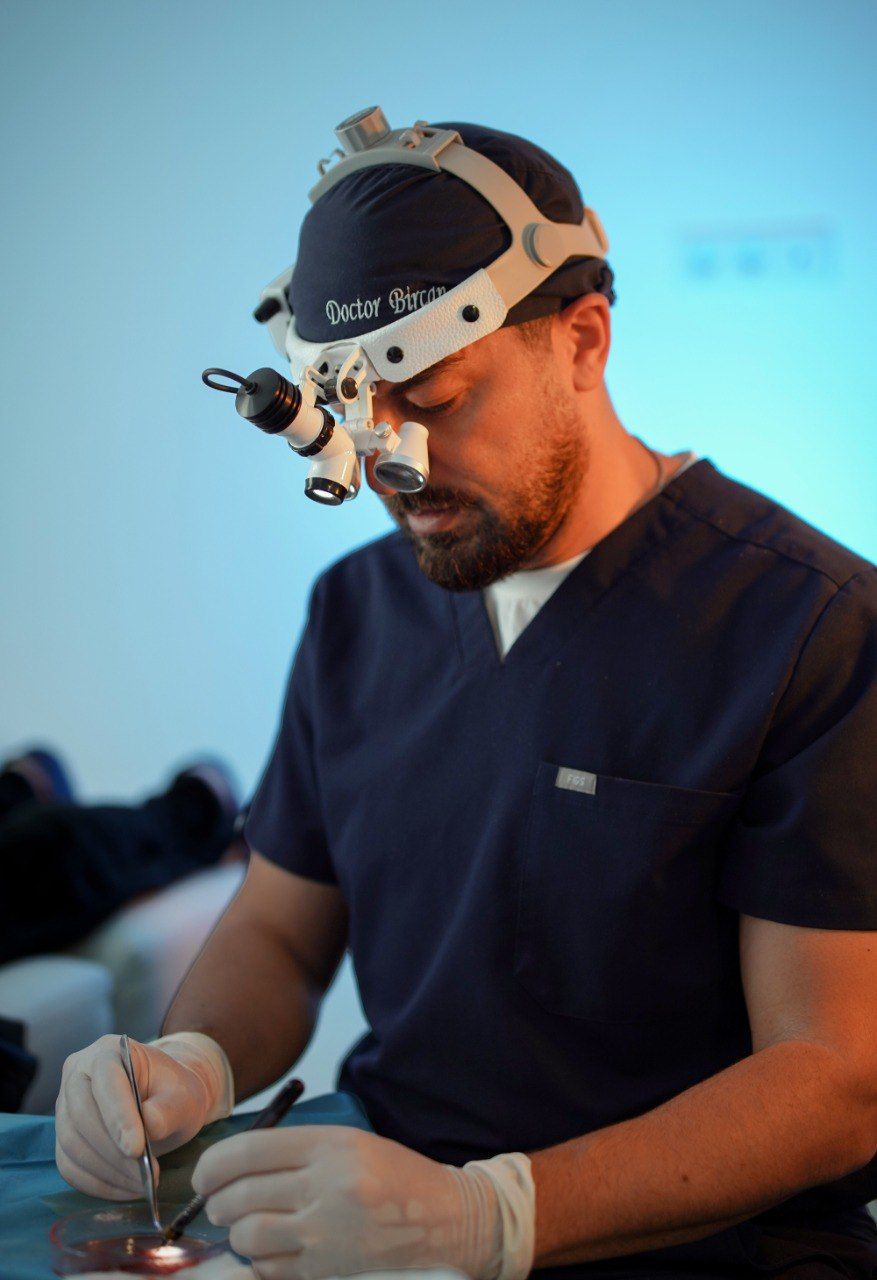
Since 2012, I have dedicated my work to hair transplantation: surgical precision and natural results.
Hair transplant doctor, Istanbul
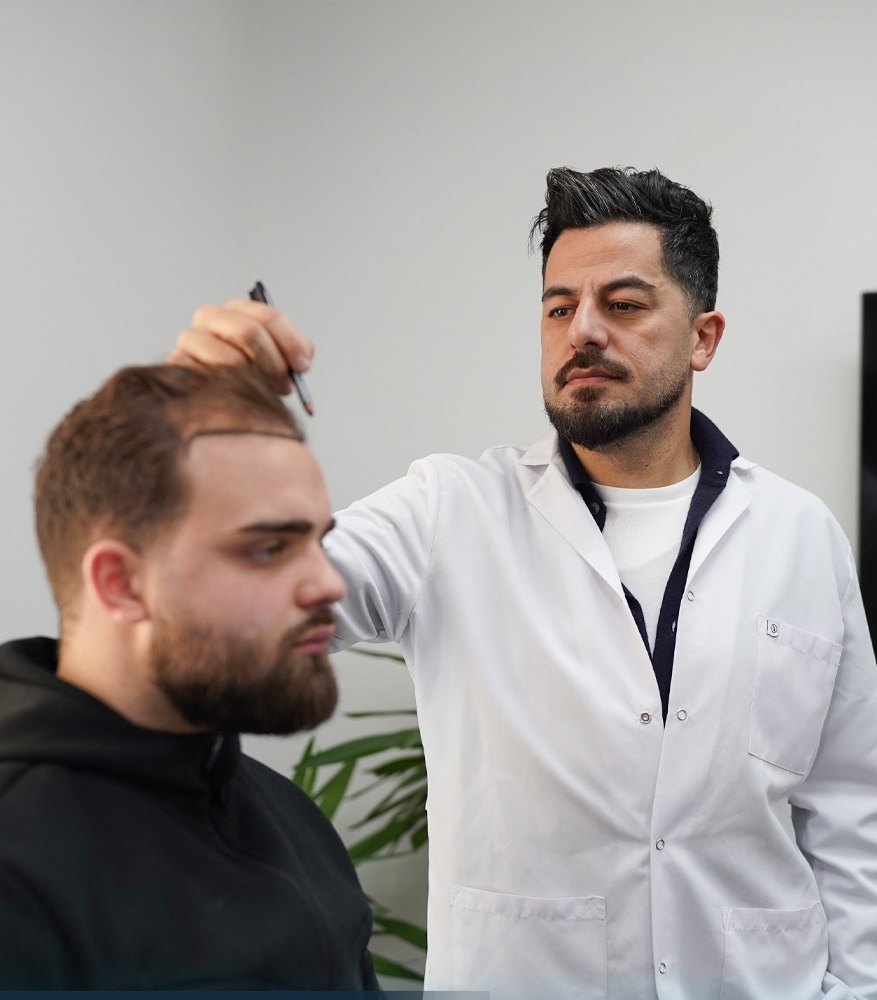
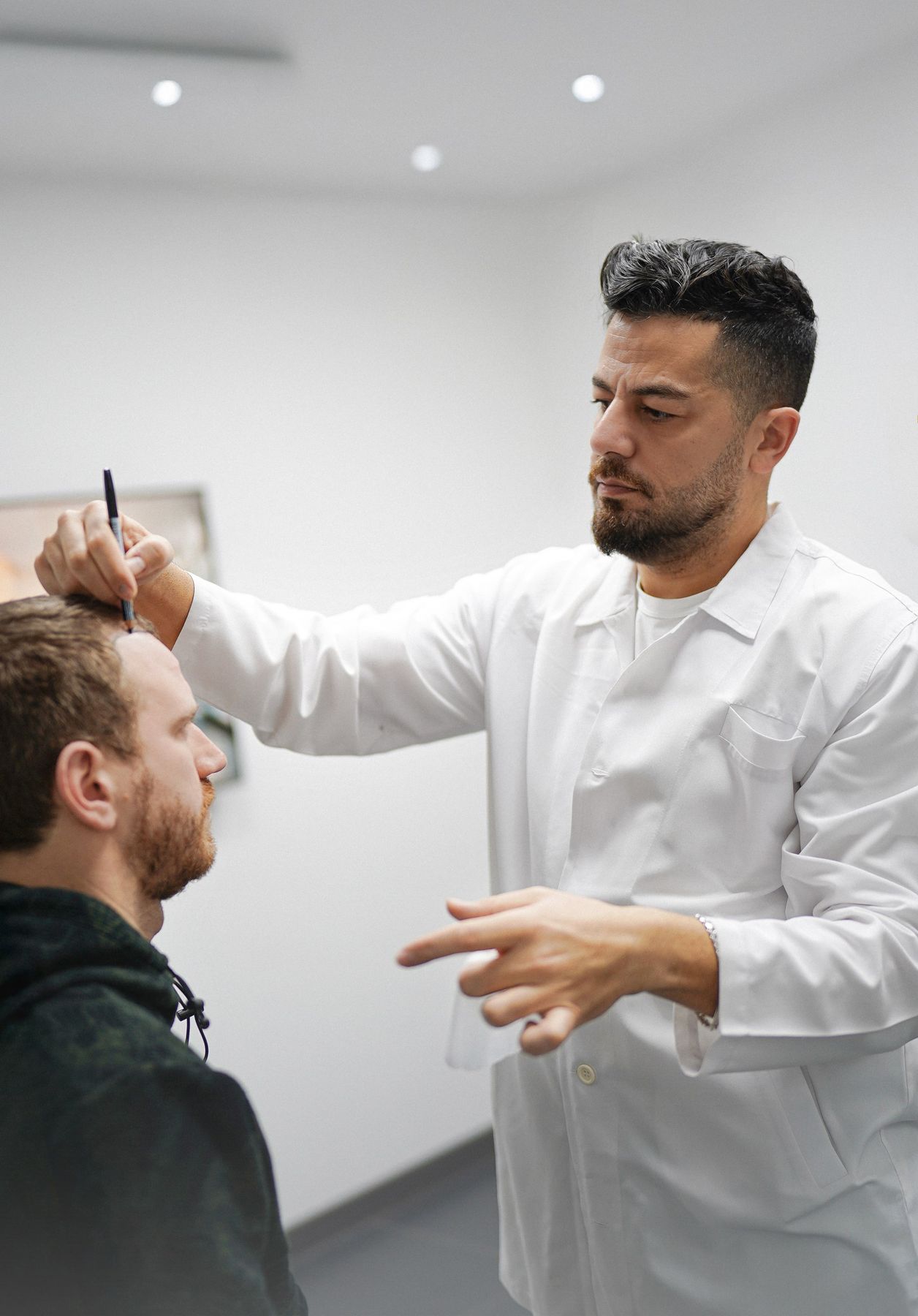
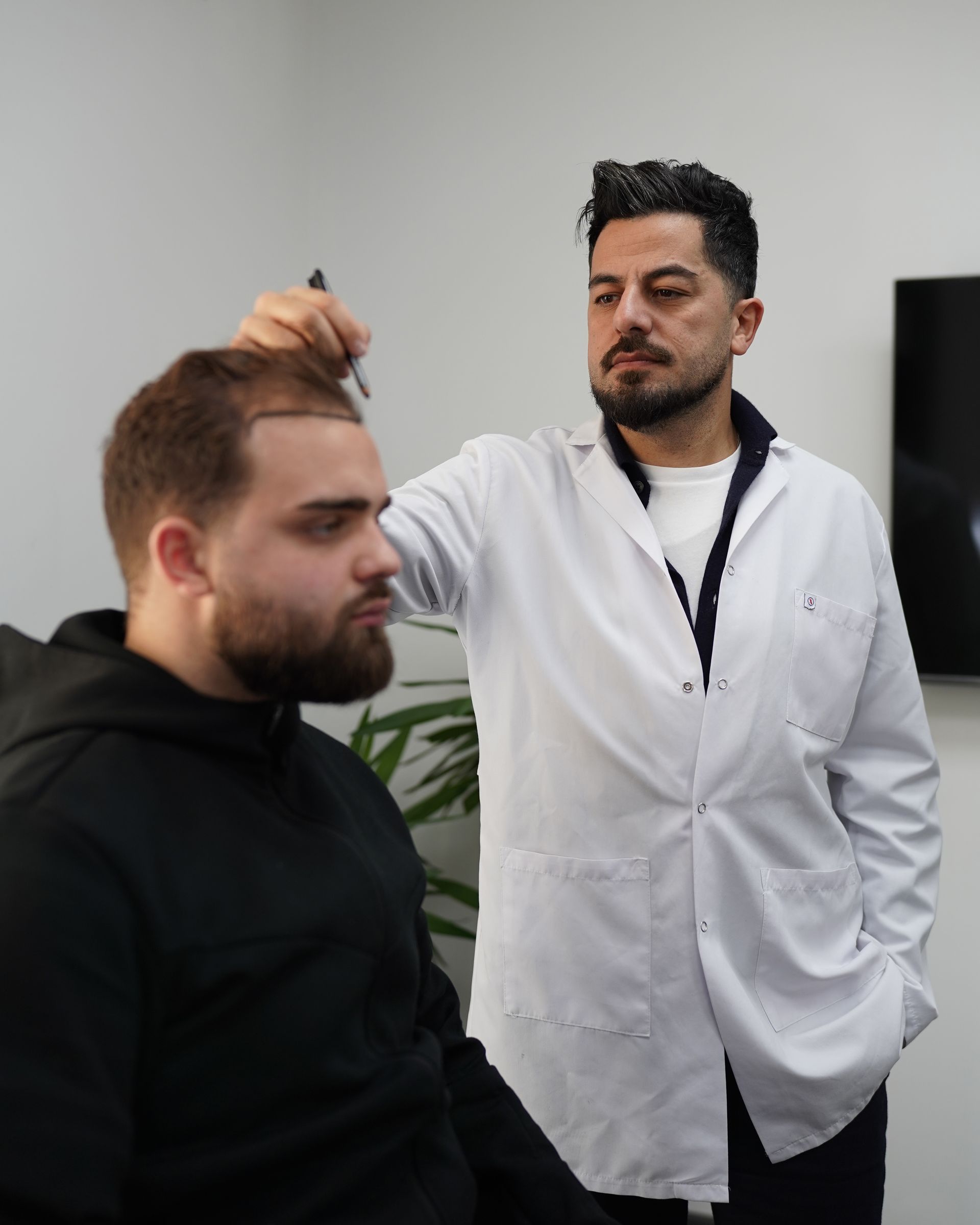
Dedicated to hair transplantation since 2012. Every plan starts at the consultation, with a pen.
 every plan starts
01Doctor
Since 2012, Dr. Sait Gökhan Bircan has dedicated 14 years to refining his craft in hair transplantation. His philosophy is defined by surgical excellence, meticulous precision and an uncompromising pursuit of natural results.
He studied medicine in Istanbul; as a student he worked in the lab on hair histology. After surgical electives in Cambridge and New York, in 2012 he chose a single field: hair, beard and eyebrow transplants.
2008 · with Prof. Dr. Ayhan Bilir,
stem cells and hair histology
Since 2012, I have dedicated my work to hair transplantation: surgical precision and natural results.
International Society of Hair Restoration Surgery
congresses he attended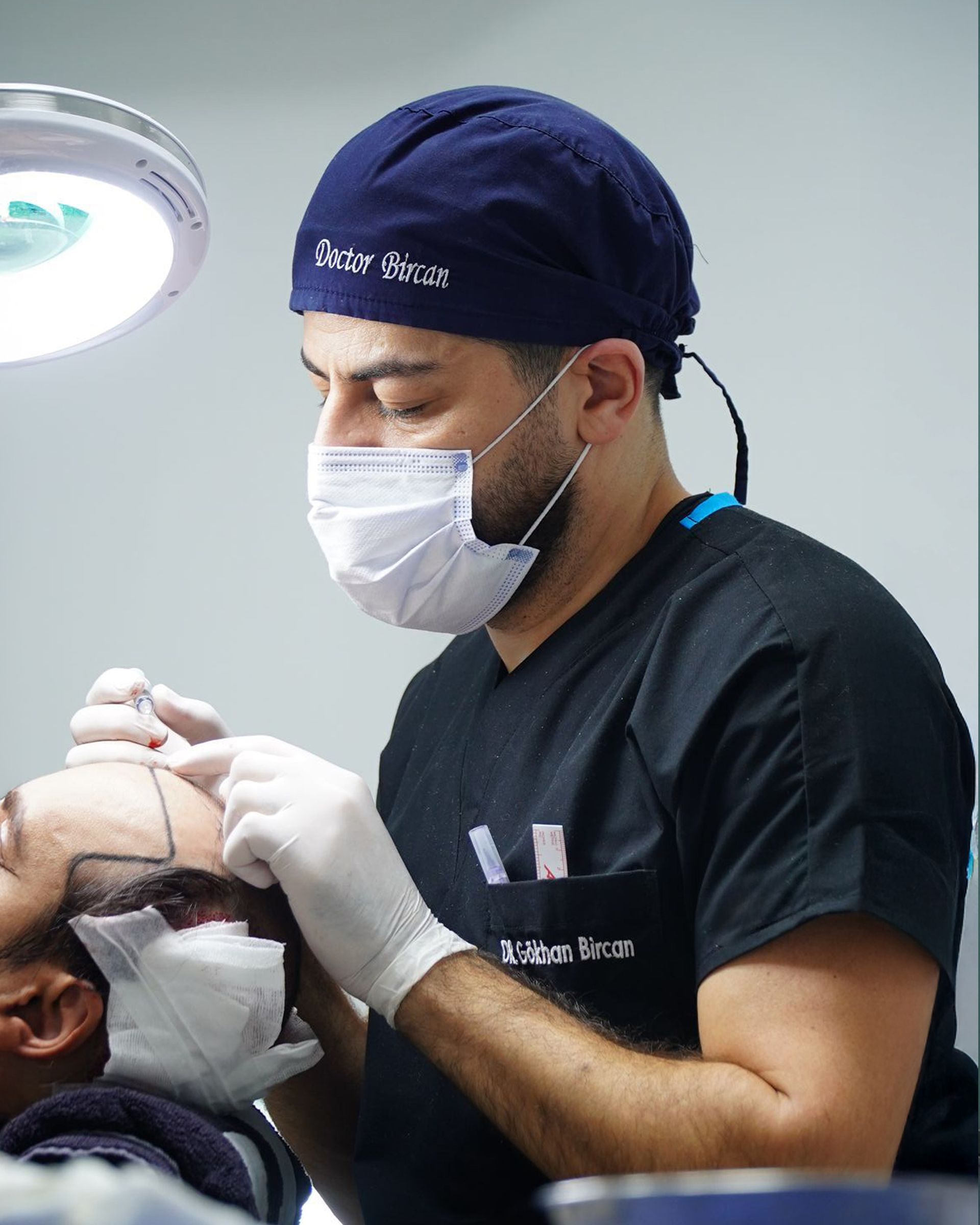
FUE, DHI and unshaven transplants. In 2015 he was granted a patent for the punch he designed for unshaven transplants.
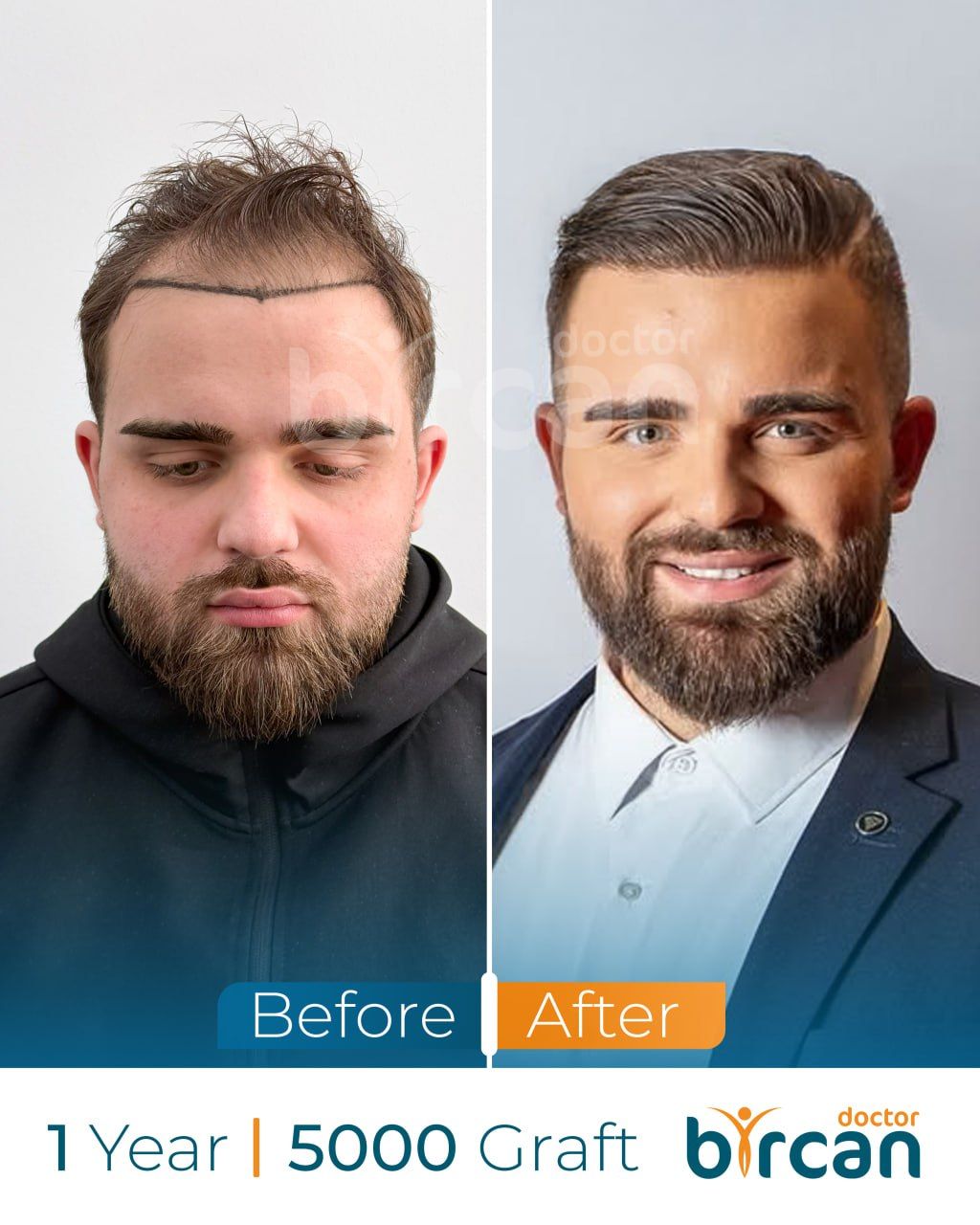
Every result is labelled with its timeframe and graft count.
Education, electives, patent, membership, congresses and certificates. Tap any card to see the details.
02Questions
Considered answers based on 14 years of experience in hair transplantation. Understand the techniques, surgical planning and principles behind Dr. Bircan's approach.
Yes. Single-hair grafts are usually used at the very front of the hairline, and each one is placed individually following the natural direction of the hair. Multi-hair grafts further back add density.
figure 2a: single-hair graft ↓No. In a hair transplant, your own grafts are taken from the donor area and moved to the thinning area. As a student, Dr. Bircan worked in the lab on stem cells and hair histology; which treatment suits you is assessed at the consultation.
2008 · with Prof. Dr. Ayhan BilirIn an unshaven transplant, the existing hair is not cut. In 2015 Dr. Bircan developed his own punch design for this method and was granted a patent for it. Whether it suits you depends on how many grafts you need and where the thinning is.
2015 · patented punchIt depends on the size of the thinning area and the density of your donor area; the exact number comes from photos and the consultation. Across the 31 cases on this page, between 3500 and 5000 grafts were implanted.
all 31 cases below ↓The first fine hairs usually appear from the 3rd month. The result is mostly assessed at 12 months; on the crown, maturing can take a few more months.
month-by-month timeline ↓Usually, from the 2nd week to the 3rd month, most of the transplanted hair falls out; this is called shock loss. The roots stay in place under the skin and the new hair grows from them.
an expected phaseYes. For women, a separate plan is made for a high forehead, a receding hairline or patchy thinning. The cause of the hair loss is assessed before the transplant.
Yes; alongside hair transplants, beard and eyebrow transplants are also performed. For beards and eyebrows, the direction and angle of each hair are planned around the lines of your face.
choose your area ↓03Areas
Tap an area on the head: alongside, you will see which techniques are used there, real results, and how to photograph it.
04Results
Drag the line to move between before and after surgery. Each case shows its timeframe and the number of grafts implanted.
Each dot is a patient. Further right means more grafts; above the line are 1-year results, below it 6-month results. Filter, then tap a dot to open it large.
Results vary from person to person. The photos are of real patients; each is labelled with its timeframe and graft count.
 Example: a drawing made at the consultation
Get a hairline preview
Fill in the form and add three photos. We prepare a preview for you: your proposed new hairline is drawn on your photo. Then we get in touch and talk through the plan together.
05Techniques
Which technique suits you is decided from photos and the consultation. Open the tabs to compare; below, you can read what a graft is and which grafts go where.
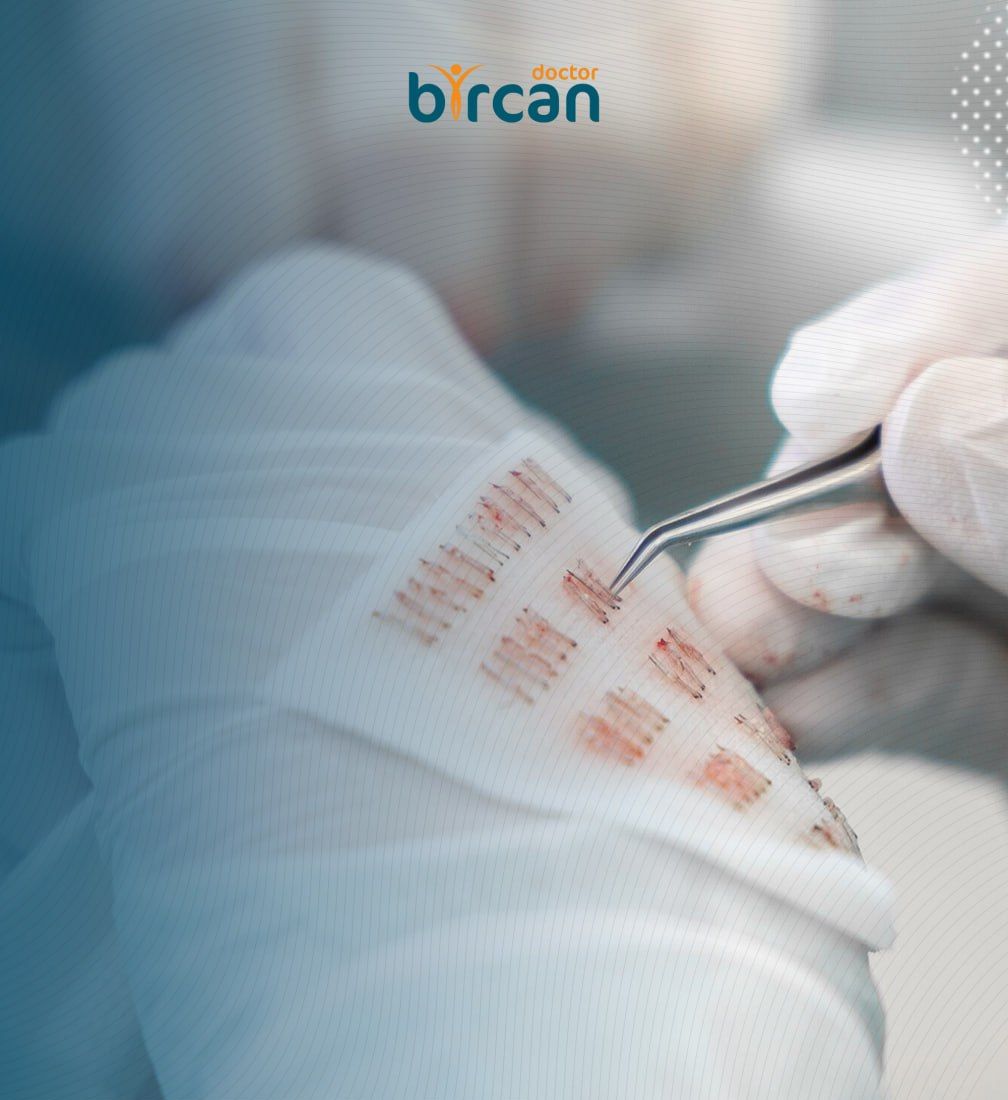
Grafts are taken one by one from the donor area at the back and sides of the head and placed into channels opened beforehand. It is a common choice for larger thinning areas.
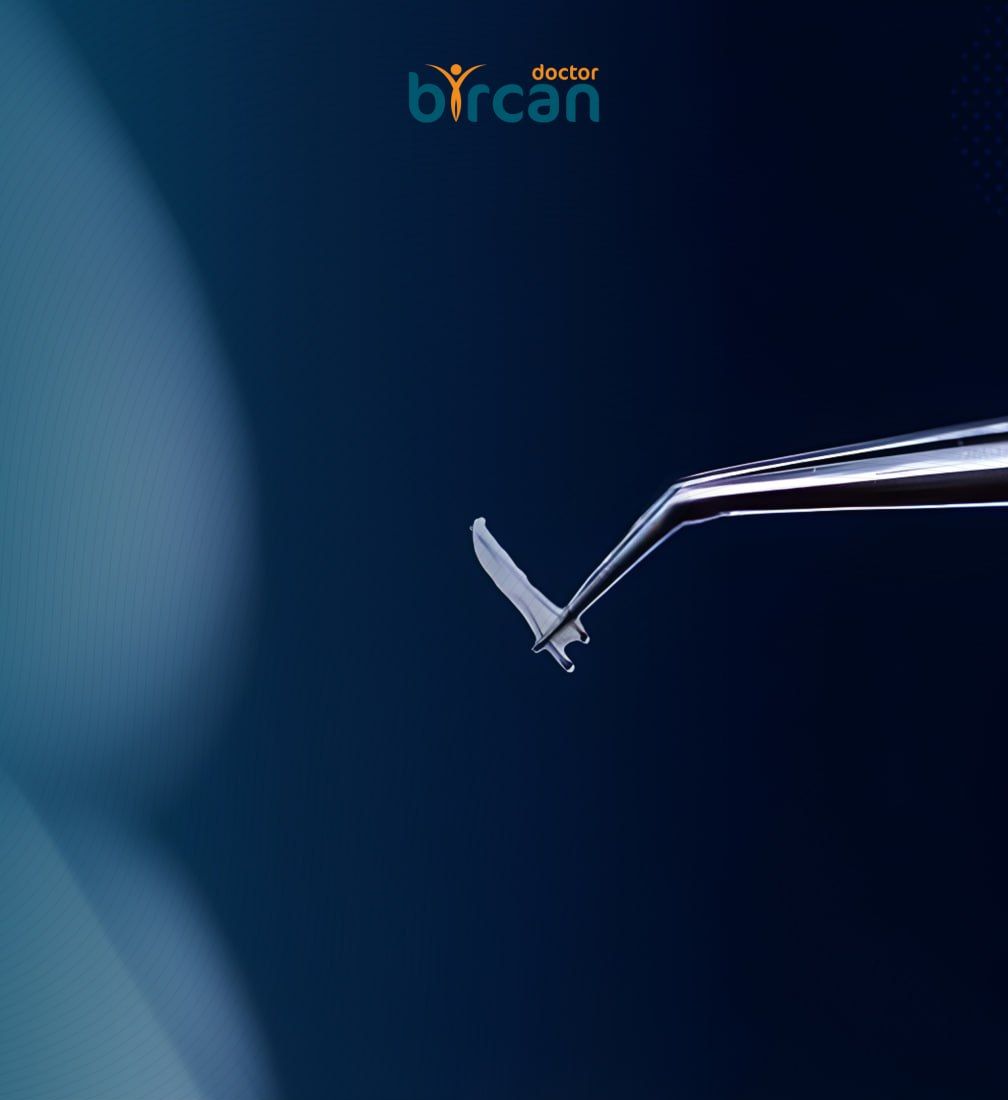
Grafts are placed directly with an implanter pen, without opening channels first. The direction and angle of each graft are checked one by one.
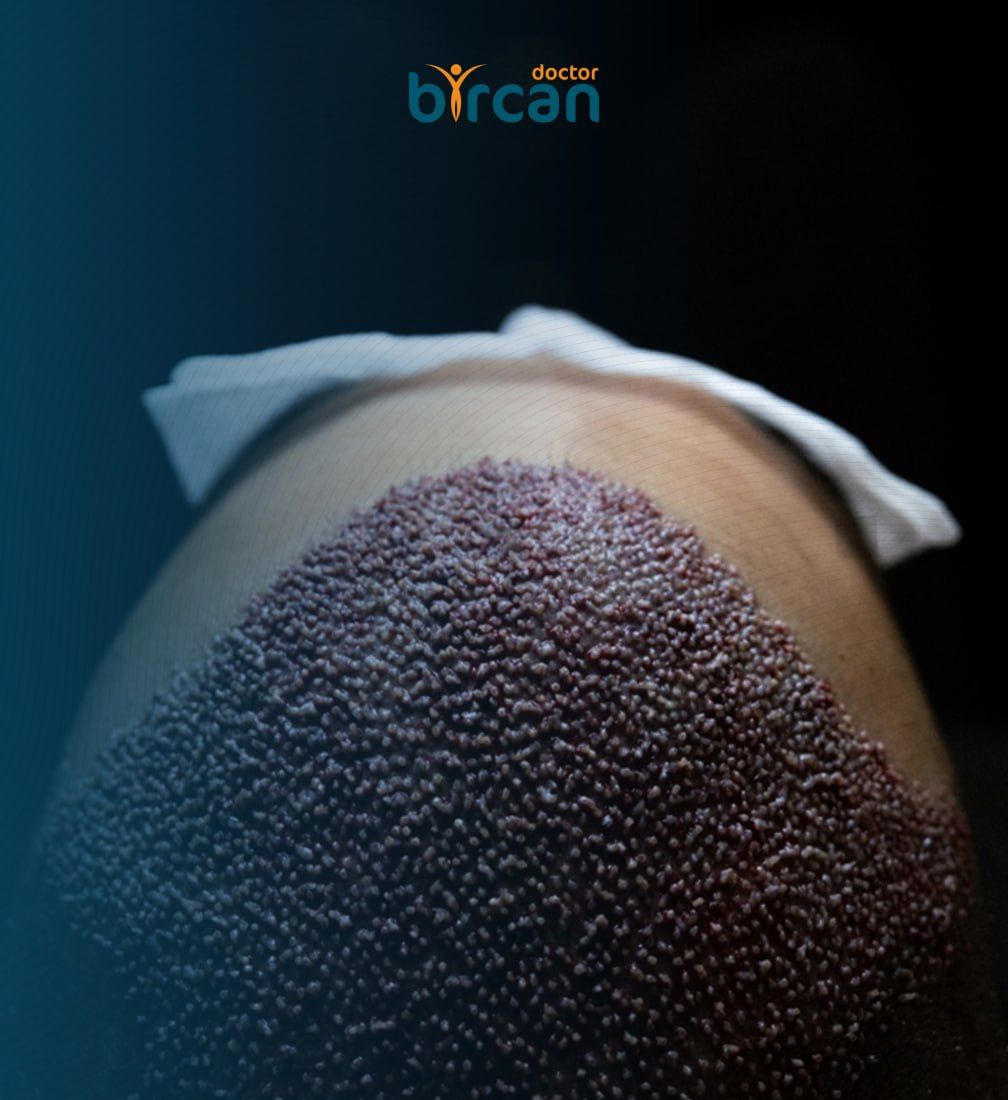
A transplant done without cutting the existing hair. In 2015 Dr. Bircan developed his own punch design for this method and was granted a patent for it.
2015 · his own punch design, patented
Sparse or patchy beard and moustache areas are filled in, planned around the lines of your face and the natural growth direction of the hair.

Grafts are placed one by one, taking into account the fine texture and flat growth angle of eyebrow hair; the eyebrow shape is drawn together beforehand.

Planning for women with a high forehead, a receding hairline or patchy thinning. The cause of the hair loss is assessed before the transplant.

Plasma separated from your own blood is applied to the scalp. It can be considered on its own or together with a transplant.
In a hair transplant, hairs are not taken one at a time but together with the group they grow in and the fine tissue around it; this piece is called a graft. That is why the number of grafts is not the same as the number of hairs.
Single-hair grafts are usually used at the very front of the hairline; further back, multi-hair grafts build density. The distribution is planned for each patient at the consultation.
06Process
In two parts: the three days you spend in Istanbul and the twelve months after you go home. Switch between the tabs.
You book your flight around the schedule we plan together. From the airport to your flight home, you know in advance where you will be at every step.
Your photos are reviewed and you receive a graft estimate and a technique recommendation. We choose a suitable date together.

You send us photos on WhatsApp at set intervals; your progress is followed for a full year.
Day 2 · step by step
Timings depend on the number of grafts; the final plan is made at the consultation.
How does it work with another technique?Tap one and the three days and surgery day change to match.
The programme may vary from person to person. The final schedule is prepared after your assessment, around your flight times.
From surgery day to month twelve, see month by month which phase your hair goes through.
Day 0
Timings and appearance vary from person to person; this describes the general course after a hair transplant. The photos are of real patients and show the month they were taken.

Surgery day with FUE, step by step Grafts are taken one by one from the back and sides of the head; channels are opened in the recipient area first, then the grafts are placed into them.
Channel opening and implantation are two separate stages. It is a common choice for large thinning areas and high graft counts. Who it is considered for: People with thinning at the front and crown. Time: About 6–9 hours, depending on the number of grafts.
Surgery day with DHI, step by step Grafts are taken one by one and placed directly with a Choi implanter pen, without opening channels separately.
Day 1: Arrival: You are met at the airport and taken to your hotel. At the clinic: Consultation, donor area assessment and pre-operative blood tests. Drawing: The hairline and the area to be thickened are decided together with Dr. Bircan.
Day 2: Morning: Transfer to the clinic, photos, hair prepared according to the plan and local anaesthesia. During the day: Graft harvesting; then the grafts are loaded into the pens and implanted directly. Evening: You go back to your hotel; you receive written instructions for the first night.
Channel opening and implantation happen in a single step, so the graft spends less time outside the body. It is preferred for the hairline and for adding density. Who it is considered for: Plans focused on the hairline and adding density. Time: Depends on the number of grafts.
Surgery day with long hair (unshaven), step by step The existing hair is not cut; grafts are harvested and implanted at full length. Dr. Bircan developed his own punch design for this method and was granted a patent in 2015.
Day 1: Arrival: You are met at the airport and taken to your hotel. At the clinic: Consultation, donor area assessment and pre-operative blood tests. Drawing: The area to be implanted is marked, and you discuss together which part of your hair will stay uncut.
Day 2: Morning: Transfer to the clinic, photos and local anaesthesia. The hair is not cut. During the day: Grafts are harvested at full length and implanted between the existing hairs. Evening: You go back to your hotel with your hair uncut.
It is done without cutting the hair, so it is for partial transplants: up to about 3000 grafts in a single session. Whether it suits you depends on the number of grafts needed and where the thinning is. Who it is considered for: People who don't want to cut their hair short; partial thinning. Time: Depends on the number of grafts.
Surgery day for a female hair transplant, step by step For women, the recipient area is not shaved; the cause of the hair loss is assessed before the transplant, and DHI is usually preferred.
Day 1: Arrival: You are met at the airport and taken to your hotel. At the clinic: Consultation, donor area assessment and pre-operative blood tests. Analysis and drawing: The cause of the hair loss and your medical history are assessed; the recipient area is marked.
Day 2: Morning: Transfer to the clinic, photos and local anaesthesia. Your hair is not shaved. During the day: Grafts are taken from between the nape and the ears and implanted with a special pen. Evening: You go back to your hotel; you receive written instructions for the first night.
The recipient area is not shaved; grafts can be taken from the nape and from between the ears. If there is only thinning, a treatment such as mesotherapy may be recommended instead of a transplant. Who it is considered for: A high forehead, a receding hairline or patchy thinning. Time: About 6–8 hours, depending on the number of grafts; it can be shorter with DHI.
Surgery day for a beard and moustache transplant, step by step Grafts are taken from the nape and behind the ears, or from dense areas of the beard; the beard line is drawn around the lines of your face.
Day 1: Arrival: You are met at the airport and taken to your hotel. At the clinic: Consultation, donor area assessment and pre-operative blood tests. Drawing: The beard and moustache line is drawn together, around the lines of your face.
Day 2: Morning: Transfer to the clinic, photos and local anaesthesia. During the day: Graft harvesting and implantation following the growth direction of the hairs. Evening: You go back to your hotel; you are shown how to care for the face area.
Day 3: Check-up: The implanted area and the donor area are checked and the dressing is removed. First wash: The dressing is changed; you are shown how to clean the face area. Departure: Transfer to the airport, planned around your flight time.
The most important thing is the direction of the hairs: beard hair grows at a different angle in each area of the face. Shock loss may occur around week 2; this is normal. Who it is considered for: Sparse or patchy beard and moustache. Time: A few hours depending on the number of grafts; at most about 8 hours.
Surgery day for an eyebrow transplant, step by step Fine, single-hair grafts are usually taken from the nape and implanted one by one with a Choi pen, following the flat angle of the eyebrow hairs.
Day 1: Arrival: You are met at the airport and taken to your hotel. At the clinic: Consultation, donor area assessment and pre-operative blood tests. Drawing: The shape of your eyebrows is drawn together at the preliminary consultation.
Day 2: Morning: Transfer to the clinic, photos and local anaesthesia. During the day: Fine grafts are taken from the nape and implanted into the eyebrow one by one. Evening: You go back to your hotel; on the first day the eyebrows should not get wet.
Day 3: Check-up: The implanted area and the donor area are checked and the dressing is removed. First wash: A check-up is done; you are shown how to care for the eyebrow area and told not to touch the scabs. Departure: Transfer to the airport, planned around your flight time.
Eyebrow hairs grow very flat, so the angle is adjusted for every single graft. The implanted hairs usually start to grow within 3 months. If needed, a second session is done at least 1 year later. Who it is considered for: Sparse, patchy or misshapen eyebrows. Time: About 1–3 hours, depending on how sparse the brows are.
07Clinic
A two-storey building with a garden and a pool. Inside: a waiting lounge with trees, quiet corners, colourful murals, a café and the operating room. Below, you can see what each one is for.
What's there where you will spend three days, and why. Tap a card to see the details.
A few photos and a short message are enough. The online assessment is free.
Subscribe to our YouTube channelResults, the process and patient experiencesWith your permission, we use Google Analytics cookies to understand how the site is used. If you decline, only the cookies the site needs to work are kept. Details are in the cookie policy.